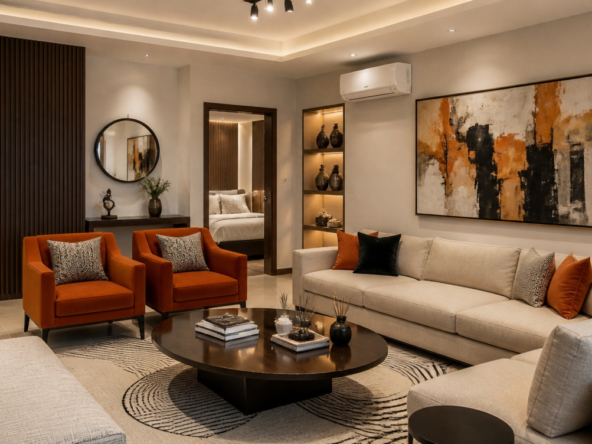
A furnished apartment can save you money. It can also cost you more.
The difference comes down to what you are paying for, how long you plan to stay and what you would have to spend if the furniture wasn’t already there.
An unfurnished property may give you more freedom, but it also means taking on the cost and effort of creating a functional home from an empty space.
So before choosing based on the rental price alone, there are five things worth considering.

- How Long Do You Plan to Stay?
The length of your stay can change which option makes more financial sense.
If you are relocating for work, spending a defined period in Accra or uncertain about how long you will remain, a furnished rental can reduce the costs and logistics involved in setting up a home. The major furniture and household items are already in place, so you can settle in without starting from scratch.
For a longer stay, an unfurnished property may be more practical. You can furnish the space gradually, choose what suits your needs and spread the cost over time.
The shorter the stay, the more valuable convenience can become. The longer the stay, the more worthwhile it may be to invest in furnishing a space yourself.
- Look Beyond the Monthly Rent
The rental price is an important consideration, but it should not be the only figure you compare.
A furnished property may have a higher rent because the furniture, appliances and other household items form part of the offering. An unfurnished property may have a lower rent, but you take on the cost of furnishing it yourself.
Consider what you would actually need to buy. A bed, sofa, dining set, appliances, curtains and other essentials can quickly become a significant expense. You may also need to factor in delivery, installation, maintenance and the cost of moving those items later.
This is why comparing furnished and unfurnished properties requires looking at the total cost of living in the property, not simply the advertised rent.
- What Do You Already Own?
Your existing belongings can make one option considerably more suitable than the other.
If you already own most of the furniture you need, an unfurnished property allows you to bring those belongings into a space that you can arrange to your liking. Paying for a furnished property could mean paying for items you do not need or use.
But if you are moving with very little, furnishing an entire property can require considerable time and money.
For someone relocating to Accra from another city or country, a furnished property can remove much of that initial burden. You can arrive with fewer belongings and have the essentials already available.
The question is therefore not just what the property provides, but what you would have to provide yourself.
- How Much Control Do You Want Over the Space?
Furnished and unfurnished properties offer different levels of control.
With an unfurnished property, you have greater freedom to choose your furniture, decide how each room functions and create a space that reflects your preferences. This can be particularly useful if you work from home, need specific storage solutions or have a particular way of using your living space.
A furnished property offers less flexibility in that regard, but that may be exactly what makes it attractive. If your priority is having a functional home without spending time sourcing furniture and coordinating deliveries, the convenience can outweigh the lack of control.
Before choosing, consider whether you want a home that is ready for you or one that you can build around yourself.

- What Happens When You Leave?
Moving out is often overlooked when people compare rental options.
With a furnished property, you generally have fewer large belongings to transport, store or sell when your lease ends. This can make relocation easier, particularly if you expect to move again within a relatively short period.
With an unfurnished property, the furniture you purchase becomes part of your assets, but it also becomes part of your moving plans. You may need to transport it to your next home, store it or sell it.
This is another reason the length and nature of your stay matter. A rental arrangement should work not only when you move in, but also when your circumstances change.
Furnished or Unfurnished: Which One Is Right for You?
There is no universal answer.
A furnished rental may suit you better if you:
Expect to stay for a shorter or uncertain period
Are relocating without furniture
Want to minimise the work involved in setting up a home
Expect to move again
Value convenience over personalisation
An unfurnished rental may be more suitable if you:
Plan to stay for several years
Already own furniture and household items
Want greater control over the look and function of your home
Have specific furniture or space requirements
Are prepared to take on the initial cost of furnishing
The important thing is to compare the whole rental arrangement, not just the monthly figure.
A furnished property may cost more each month but save you from a large upfront expense. An unfurnished property may have a lower rent but require a greater initial investment from you.
For anyone searching for a rental property, understanding that difference can help narrow the options to properties that genuinely fit their budget, lifestyle and plans.
Because ultimately, the right rental is not simply the one with the furniture you prefer. It is the one that makes sense for how you intend to live.