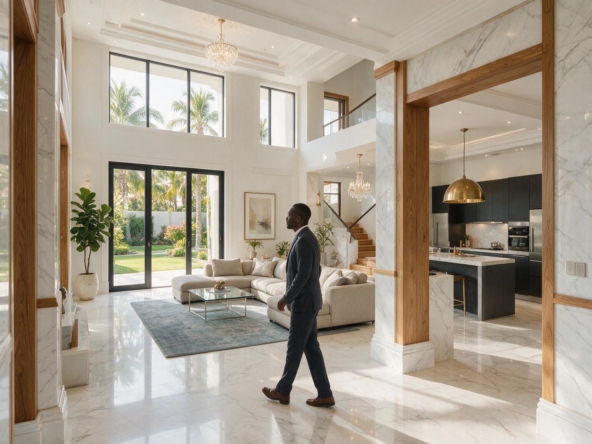
The price on the property listing is rarely the price you actually pay.
That is where many property investment calculations go wrong.
You find a property for GHS 1 million. You estimate the rent, think about how much the property could appreciate and decide the numbers look promising.
But the GHS 1 million is not necessarily what the investment will cost you.
There are expenses involved in completing the purchase, preparing the property, keeping it occupied, maintaining it and eventually selling it. Some are one-off payments. Others continue for years.
None of these costs automatically make property a poor investment. The problem comes when they are left out of the numbers.
Before investing in property in Ghana, it is worth looking at the full cost of the investment, not just the amount needed to buy it.
Here are five areas investors should consider.
- The Cost of Getting the Property Properly Secured
Buying property involves more than transferring money to a seller.
Depending on the transaction, there may be costs associated with legal services, searches, documentation, registration, valuation and other professional services.
Applicable taxes and duties may also form part of the transaction. For example, stamp duty applies to certain instruments, with the applicable rate depending on the nature and value of the instrument.
These costs can be easy to overlook when your attention is fixed on the asking price.
That is why your acquisition budget should not simply be:
Property price = total investment.
Before committing funds, establish what it will cost to complete the transaction and properly secure your ownership.
A property that fits your purchase budget may look very different once the full acquisition costs are included.
- The Cost of Getting and Keeping the Property Income-Ready
A property does not automatically start generating the return you have projected just because you own it.
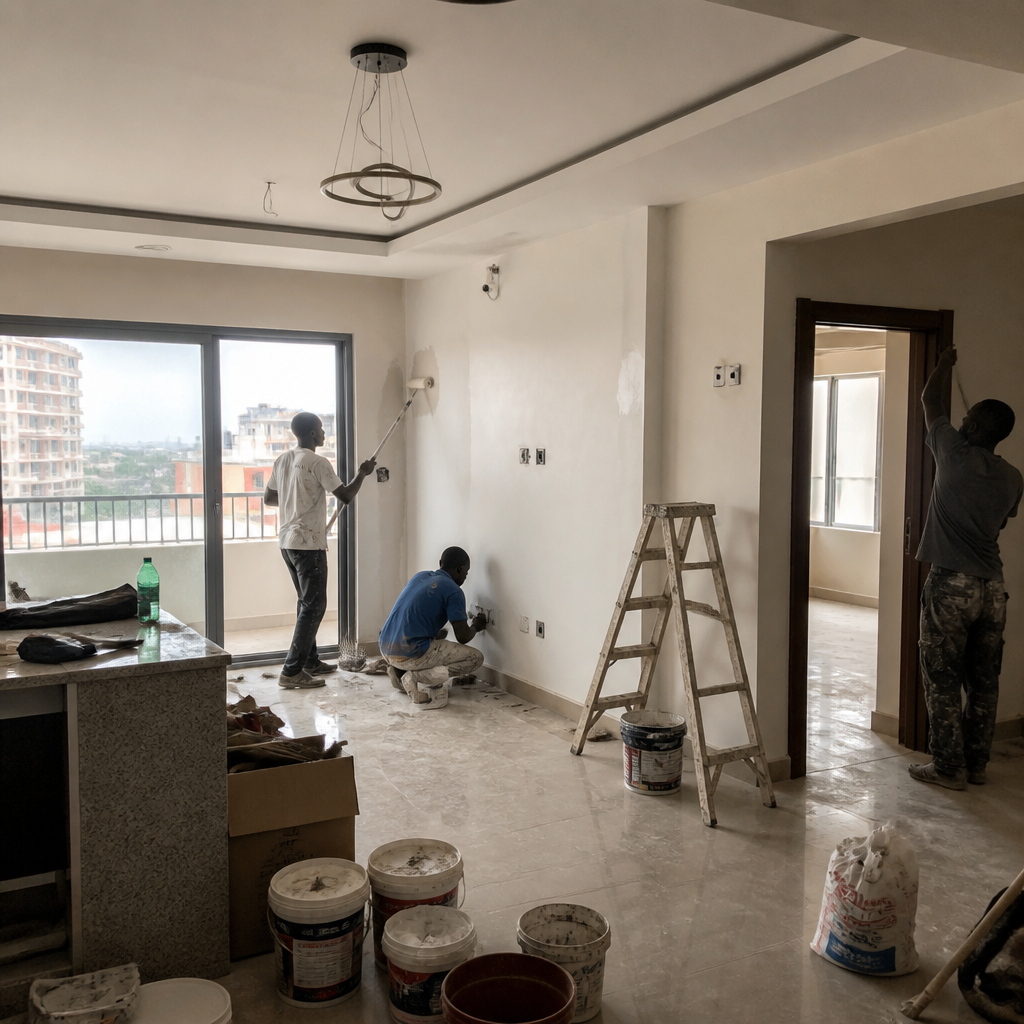
It may need work first.
Perhaps the walls need repainting. The plumbing needs attention. The kitchen needs updating. Electrical installations require repairs. Air conditioners, appliances or other fittings need replacing.
And the expenses do not necessarily end once the property is ready for use.
Buildings require maintenance. Roofs age. Plumbing wears out. Paint fades. Equipment breaks down. Common areas need attention.
For an investor, these are not simply inconvenient expenses. They affect the performance of the asset.
A property that costs GHS 1 million to purchase and another GHS 150,000 to make suitable for its intended use is not a GHS 1 million investment.
The renovation and maintenance requirements need to be part of the calculation from the beginning.
The cheaper property is not always the cheaper investment.
- The Cost of Actually Earning Rental Income
Rental income is often one of the biggest attractions of property investment.
But the rent advertised on paper is not necessarily what you will receive every year.
There may be periods when the property is vacant between tenants. There may be costs associated with finding and screening new tenants, preparing the property for occupation or managing the tenancy.
Then there are service charges, particularly for apartments and developments with shared facilities. Security, cleaning, landscaping, common-area maintenance, lifts, generators and other facilities all have operating costs.
Property management can also become an expense if you choose to have someone handle rent collection, inspections, maintenance and tenant concerns on your behalf.
These costs do not necessarily make rental property unattractive. They simply need to be included when calculating the return.
If a property generates GHS 10,000 in monthly rent but has significant recurring expenses, the GHS 10,000 is not your investment return.
What matters is what remains after the relevant costs have been accounted for.

- The Cost of Holding the Property
Property investment is usually a long-term commitment, and the costs of ownership do not stop after the purchase.
There may be ongoing taxes and other obligations depending on the property, its use and the ownership structure.
Insurance may also be worth considering to protect against relevant risks. Security can become another recurring expense, particularly where additional security arrangements are required.
For investors with financed properties, there may also be financing costs that affect the overall return.
Individually, these expenses may not appear significant compared with the purchase price.
Over several years, however, they can materially affect what the property actually costs you to own.
This is why a realistic investment calculation should look beyond the first year.
Ask yourself:
What will this property cost me to hold for five, ten or fifteen years?
That question can reveal a very different picture from the initial purchase price.
- The Cost of Eventually Selling
Property investors often spend considerable time calculating how much an asset could appreciate.
Far less attention is sometimes given to what happens when it is time to sell.
Selling can involve legal, professional, documentation and other transaction-related costs. Depending on the circumstances, there may also be tax implications.
This matters because an increase in property value is not automatically the same as your final investment return.
For example, if you buy a property for GHS 1 million and sell it years later for GHS 1.5 million, the GHS 500,000 difference does not tell the whole story.
You also need to consider what you spent acquiring the property, improving it, maintaining it and eventually selling it.
That is the difference between looking at capital appreciation and looking at the actual financial outcome of the investment.
The Real Cost of Property Is the Cost of the Journey
Property can be a strong long-term investment in Ghana, but the purchase price is only the beginning of the calculation.
A more realistic assessment considers the entire ownership journey:
Buying the property. Preparing it. Earning from it. Holding it. Eventually selling it.
That is why two properties with similar purchase prices can produce very different investment outcomes.
One may require significant renovation. Another may have higher service charges. One may attract tenants quickly, while another sits vacant for months. One may be easier and less expensive to maintain. Another may cost more to sell.
The better investment is not necessarily the property with the lowest price.
It is the one whose total cost, income potential and long-term value make sense together.
So before asking, “Can I afford to buy this property?”
Ask the more important question:
“Can I afford the full cost of owning this property, and does the expected return justify it?”
That is the calculation worth making before you invest.
Looking for property in Ghana?
Explore Keystone’s property opportunities with the purchase price, location, development quality and long-term investment potential in mind.
Because knowing what a property costs to buy is one thing. Knowing what it will cost you to own is what makes the difference.